Happy New Year everyone! I love the New Year because it is a time of fresh beginnings for me. Not only does the calendar change it’s numbers but I change my age too. This allows me to start fresh with the fresh year, every time. I never make New year’s resolutions because they result in guilt of resolutions unfulfilled and guilt is just a false man made creation that we heap on ourselves and each other. So to avoid the whole trap, I skip the resolutions and go with the appealing approach of a fresh start.
A wonderful way to start the New Year is to refresh ourselves and our bodies by realigning our food choices and the way we “feed” ourselves with what our bodies really need to be healthy and fit from the inside out.
It really isn’t rocket science, yet there is a whole science and multimillion dollar industry that has built around the way we eat that we rely on heavily. Throughout the year, I will write on important nutrition issues in terms everyone can understand that will take us all back to basics and educate us about how our bodies use food and why they need a good variety of nutritious food products to function as the lean, mean wonder machines they were meant to be.
I’m going to start the year with this simple premise –
if it is white – it probably isn’t food to your body.
IF ITS WHITE IT IS NOT FOOD UNLESS….

1. it's a root vegetable
2. it's a cauliflower
3. it's a mushroom or
4. it's milk
In general foods that are white are processed.
Yes even the most delicious pasta dish and a mouthwatering platter of delectable cheeses, warm breads and crackers.
So what do I mean when I tell you white food isn’t food?
Almost every white food that is not on the list above started its life out as a whole food or grain of another color. Take wheat for example, don’t we all love a good loaf of bread? Most cultures on our amazing planet live on wheat, in one form or another, as a staple in their diet.
SO...Let’s take a closer look at wheat shall we?
Wheat is a grass that is cultivated in almost every part of the world today. It is the grass seed that we process and eat. By 2007 wheat was the most heavily produced cereal grain in the world after corn and rice and the second most consumed grain by humans after rice. Except for corn, wheat and rice are also some of the most highly processed cereal grains in our food supply today.
And here is an astonishing piece of information. Globally, wheat provides the major source of vegetable protein for humans today. Yes, WHEAT ! not beans and not meat ! It has a higher protein content than either corn or rice. Stop to think about this a moment. Wheat is a primary food source for most humans on the planet, serving as their major protein source. We live in a world of dire need and poverty despite the overabundance of food we experience here in the USA. Yet, around the world the trend is to process and bleach out the major nutrients from wheat. White wheat products are more desired and more favorable over whole wheat products even by those in need of a better nutrient base.
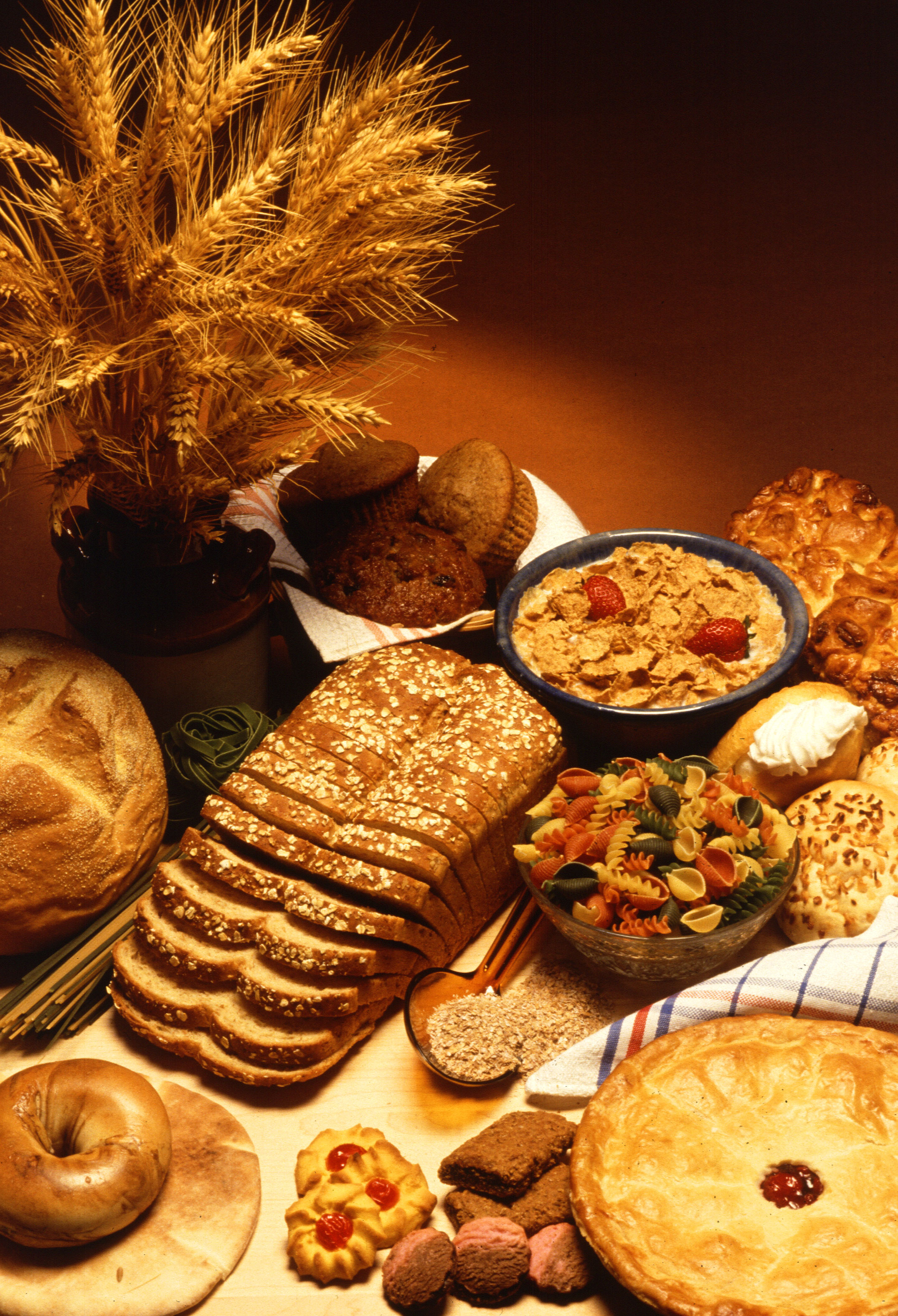 Wheat is a staple food that we use to make flour for breads, biscuits, cookies, cakes, breakfast cereal, pasta, noodles, couscous and for fermentation to make beer and other alcoholic beverages as well as some biofuels.
OK, so lets take a closer look at wheat ! The seed is made up of three parts: husk on the outside, the kernel on the inside and the endosperm at the core.
When wheat is milled into white flour, the husk and the kernel are carefully separated out. This process effectively removes the bran and the wheat germ from the resulting flour. The wheat germ is the embryo portion of the wheat kernel and is an especially concentrated source of vitamins, minerals, and proteins. The endosperm is the starch storage area of the seed that is effectively the “energy” source that sustains the seed as it germinates and grows. Therefore the process of milling wheat into white flour effectively removes the most nutritious part of the grain.
Now lets compare Whole Grain Wheat Flour with Bleached, White Wheat Flour:
Nutrition Information/100 g | Whole Grain Wheat Flour | Bleached, White Wheat Flour | Level |
Calories | 339g | 366g | |
Total Fat | 2 g | 1g | |
Total Carbohydrate | 73g | 76g | |
Dietary Fiber | 12g | 2g | ß |
Total Protein | 14g | 10g | ß |
Calcium | 3% | 2% | |
Iron | 22% | 7% | ß |
Magnesium | 138% | 6% | ß |
Selenium | 101% | 21% | ß |
Zinc | 20% | 7% | ß |
Potassium | 12% | 4% | ß |
Phosphorus | 35% | 11% | ß |
Thiamin | 30% | 3% | ß |
Riboflavin | 13% | 4% | ß |
Niacin | 32% | 6% | ß |
Vitamin B6 | 17% | 2% | ß |
Folate | 11% | 8% | ß |
Sourced from SelfNutritionData: Know what you eat: at
http://nutritiondata.self.com/facts/cereal-grains-and-pasta/9257/2
Without doing an exhaustive study, this table shows how processing a whole wheat seed into whole grain, whole wheat flour versus bleached white flour reduces the nutrient value of the foods produced from it. Pay special attention to the significant reductions in FIBER, MINERALS and VITAMIN B’s.
Now take the thought process a step further. Consider all the additives, preservatives and artificial ingredients that are then added to turn this wonderful wheat into pasta, pizza’a, breads, cookies, cakes and a host of other processed foods we eat daily. Not convinced ? Just take any processed wheat based product you regularly consume out of your kitchen cupboard and read the label.
The combination of milling the wheat, which is BROWN, into WHITE FLOUR and then processing it into donuts, pretzels, bagels and all those other yummies I love to indulge in, is simply a recipe for plugging up our bodies and inhibiting optimum functioning and therefore optimal health.
It is not my goal to tell you what to do and how to live your lives, but rather to educate you by providing valuable information that will allow you to make your own informed decisions towards obtaining your goals for optimal health and body function. Trust me, it would have been impossible for anyone to convince this Italian, Jewish girl, raised in the kitchen with he mother, grandmother and aunties that the white, gluten rich dough that formed the basis of all our core foods; pasta, breads, pastries and the white rice for the Risotto was not optimal food for me. But like I said, its not rocket science. A simple analysis like the one I've just done for you was all it took to convince me to slowly start blending whole brown rice with the white rice until I switched over entirely because I began to enjoy the nutty flavor of the the brown rice so much and felt good about the nutrition I was providing my family.
In my next blog, I will discuss additives and preservative used in food processing. If you stop to consider the two together, you may well come to the same conclusion that I did...
IF IT IS WHITE IT IS NOT FOOD unless it is:
1. a root vegetable
2. a cauliflower
3. a mushroom or
4. milk
Sources:
- Wikipedia: http://en.wikipedia.org/wiki/Wheat
- Washington Wheat Commission
- Grundas ST : Chapter: Wheat: The Crop, in Encyclopedia of Food Sciences and Nutrition p6130, 2003; Elsevier Science Ltd
- Vaughan, J. G. & P. A. Judd. (2003) The Oxford Book of Health Foods. Oxford University Press. p. 35. ISBN 0-19-850459-4.
- USDA National Nutrient Database for Standard Reference.
- SelfNutritionData: Know what you eat: at
http://nutritiondata.self.com/facts/cereal-grains-and-pasta/9257/2
External Links:
- Photos of wheat fields
- Wheat Foods Council Est. 1972
- NAWG—Web site of the National Association of Wheat Growers

No comments:
Post a Comment